1915–1916
The First Light
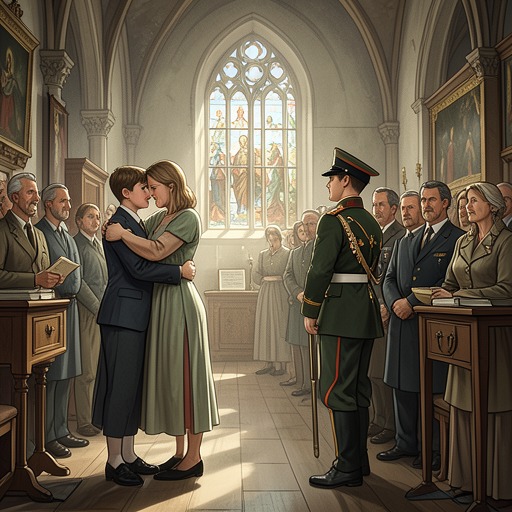
[Dorrigo Evans](entity:character-recall-character-dorrigo-evans-ea01362669ea)’s earliest memories are of sunlight filling a church hall and of being passed between the loving arms of his mother and grandmother. He remembers this beginning as a kind of welcome, before the shadows and grief that later shape his life.
As a child, he also witnesses [Tom Evans](entity:character-recall-character-tom-evans-f3427cae9a45) return from the [First World War](entity:time-recall-time-82c88d06e845) and break down in tears. The shock of seeing grown men cry becomes part of Dorrigo’s earliest understanding of feeling, memory, and the burdens war leaves behind.
Around 1920
The Vanished Wife
When Dorrigo is nine, Jackie Maguire arrives at the family kitchen weeping because his wife has taken their youngest child to [Launceston](entity:location-recall-location-launceston-ca06d48b6ec7) and disappeared. Dorrigo’s mother heats a carving knife and burns a hole through the blood blister beneath her son’s thumbnail, while Jackie’s loss unfolds beside them.
Dorrigo has seen Tom kissing Jackie’s wife near the coaching house, but he keeps the sight to himself. The woman’s disappearance remains an unresolved childhood mystery, one that will later connect his family history to the deaths on the railway.
Dorrigo’s childhood in the 1920s
A Boyhood in the Bush
Growing up in [Cleveland](entity:location-recall-location-cleveland-dc87747d7e07), Dorrigo shares a harsh, remote life with his family, travelling through the bush to visit Tom at his cave near [Ben Lomond](entity:location-recall-location-0846fdfa9ea2). There he reads poems and bush stories aloud to Tom and Jackie Maguire, who value the words even when they cannot read them themselves.
The years are marked by poverty, close companionship, and the beauty of the Tasmanian landscape. Poetry becomes for Dorrigo a refuge and a way of feeling connected to a world larger than the one he knows.
Around age twelve
The First Great Mark
At [Launceston](entity:location-recall-location-launceston-ca06d48b6ec7) High School, Dorrigo begins on the margins of the boys’ lunchtime football game, watching older students dominate. On his third day, he launches himself over the pack and catches a high ball in the full glare of the sun.
The catch gives him a sudden sense of entering a larger world. He later understands it as a moment of pure joy and possibility, a brightness he will spend much of his life trying to recover.
Dorrigo’s adolescence and early adulthood
The Cost of Leaving
Dorrigo is the only child in his family to win a scholarship, and he leaves [Tasmania](entity:location-recall-location-tasmania-f8a2cedb5051) to study medicine at the [University of Melbourne](entity:organization-recall-organization-university-of-me-52e5e9e731ec). He enters a world of privilege and social certainty that makes his family’s hard-won survival look, to him, like failure.
His mother dies of tuberculosis when he is nineteen, while he is away. He does not attend her, and at her funeral he does not cry; later, her remembered voice and the light of his childhood return to him as sources of grief and longing.
Before Dorrigo meets her
Amy’s Unwanted Marriage
[Amy Mulvaney](entity:character-recall-character-amy-mulvaney-3cfa153d3b14) becomes pregnant before marrying [Keith Mulvaney](entity:character-recall-character-keith-mulvaney-6bcde9ccc712). Keith does not initially want to marry, but after arranging for her to see a doctor in [Melbourne](entity:location-recall-location-c8e23ab07219), he changes course and proposes; the pregnancy ends in an abortion.
[Amy](entity:character-recall-character-amy-b0c9984bdc2f) enters the marriage ashamed and disoriented, while Keith’s kindness and the security of the hotel life he provides cannot give her the passion or uncertainty she craves. Their bond is shaped from the beginning by guilt, care, and a loneliness neither can resolve.
Melbourne Cup Day, late 1940
The Bookshop Encounter
While stationed at [Warradale](entity:location-recall-location-0cfdc26ddd91), Dorrigo spends a leave day in an [Adelaide](entity:location-recall-location-adelaide-63062edeb5d8) bookshop, drawn upstairs by books and shafts of sunlight. There he meets [Amy Mulvaney](entity:character-recall-character-amy-mulvaney-3cfa153d3b14), wearing a red camellia in her hair; her direct gaze and odd, playful conversation unsettle him.
She asks him to read Catullus, and the poem’s words make their brief encounter feel intimate and dangerous. Dorrigo leaves without knowing her name, yet the meeting makes his life with [Ella Lansbury](entity:character-recall-character-ella-lansbury-1e36720ef58b) feel suddenly remote and false.
Late 1940
The Nephew at the Hotel
After receiving an invitation from his uncle, Dorrigo drives to the [King of Cornwall Hotel](entity:location-recall-location-king-of-cornwall-hot-35967f25b90f) and discovers that the barmaid he met in [Adelaide](entity:location-recall-location-adelaide-63062edeb5d8) is his uncle’s wife. [Amy](entity:character-recall-character-amy-b0c9984bdc2f) recognizes him too, and they quietly acknowledge their earlier meeting while [Keith Mulvaney](entity:character-recall-character-keith-mulvaney-6bcde9ccc712) remains unaware of what has passed between them.
Dorrigo escapes into drinking, but the memory follows him. He begins to understand that his attraction is not a passing curiosity, even as he tries to convince himself that he can simply stay away.
A later leave in 1940
The Candlelit Dance
Dorrigo returns to the hotel and goes with [Amy](entity:character-recall-character-amy-b0c9984bdc2f) to a nightclub. As the band plays “Auld Lang Syne,” the candles are extinguished one by one, and they dance in darkness and then moonlight, sharing a closeness neither names plainly.
Amy tells him that for the evening he is hers, while insisting that she belongs to Keith. The contradiction excites and frightens Dorrigo, and their restrained farewell leaves the sense that something has begun despite their repeated claims that nothing has happened.
Shortly after the dance
The First Kiss of Desire
[Amy](entity:character-recall-character-amy-b0c9984bdc2f) takes Dorrigo to a secluded beach for a day together. When she cuts her thigh on a fence, he kisses away the beads of blood; later, resting in the dunes, she tells him she wants to be with him.
They make love, but Dorrigo’s desire repeatedly gives way to fear and distance. Their intimacy feels at once like a homecoming and a threat to his freedom, foreshadowing the unstable pattern of closeness and retreat that will define the affair.
Summer 1940–1941
A Secret Summer
Dorrigo spends whatever leave he can obtain with [Amy](entity:character-recall-character-amy-b0c9984bdc2f), and their secret meetings become the only part of his life that feels real to him. She confides the history of her pregnancy and abortion, and the loneliness that has persisted within her marriage to Keith.
Their affair grows reckless, while both continue to tell themselves that it can remain separate from their ordinary lives. Amy’s longing for a life with Dorrigo deepens; he is drawn to her with equal force but remains unable to make a clear choice.
The final days before deployment
Keith Names the Betrayal
After a card evening, Keith tells [Amy](entity:character-recall-character-amy-b0c9984bdc2f) that he has known about her attachment to Dorrigo from the first. He speaks not with rage but with sorrow, admitting that he once hoped their relationship would burn out and that his own decisions over the pregnancy helped destroy their marriage.
Amy denies that anything is happening, but Keith recognizes her silence as confirmation. His words leave her facing both her desire for Dorrigo and the painful knowledge of the kindness she is betraying.
Monday morning before deployment
The Last Telephone Call
[Amy](entity:character-recall-character-amy-b0c9984bdc2f) telephones Dorrigo at the military camp to tell him that Keith knows. Dorrigo assumes she will leave her husband and that the two of them can begin a life together, but Amy instead orders him to return to [Ella Lansbury](entity:character-recall-character-ella-lansbury-1e36720ef58b).
He feels an unexpected relief at the prospect of escaping the confusion, yet promises Amy that he will return after the war and marry her. Almost immediately, his unit’s departure is moved forward, making the promise the last thing he says to her before he is sent away.
1941
The March Into Syria
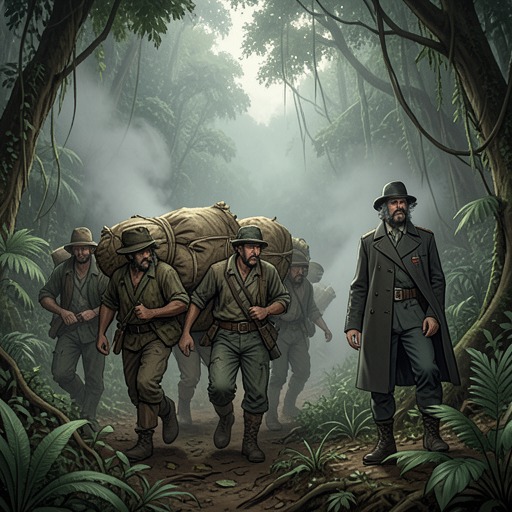
Serving with the 2/7th Casualty Clearing Station, Dorrigo is ordered to move supplies across a confused and dangerous front in [Syria](entity:location-recall-location-7cb706bcaa34). His maps conflict with those of his Cypriot muleteers, so he chooses a direction by instinct and keeps the party moving.
The journey exposes him to the arbitrary destruction of war: dead soldiers, shattered villages, and civilians caught among the fighting. He learns that sometimes movement itself is the only decision available.
During the Syrian–Lebanese campaign
The Dead Village
Dorrigo and the muleteers join a small Tasmanian machine-gun unit led by [Darky Gardiner](entity:character-recall-character-darky-gardiner-2dde1e0b7f8a). They cross battered mountain villages and fields of dead men, while Darky jokes about his odds of surviving the war and shares food from his seemingly inexhaustible kitbag.
They reach a village under bombardment by the [Royal Navy](entity:organization-recall-organization-royal-navy-31f3701ac194), where ordinary trade continues amid the wreckage. The men’s jokes and practical routines do not lessen the horror; they become a way to keep moving through it.
During the Syrian campaign
The Shelling at Breakfast
At dawn, Darky sits in a blue silk armchair in the ruined village and gives Dorrigo sardines. A shell lands nearby, killing an Arab boy and leaving [Yabby Burrows](entity:character-recall-character-yabby-burrows-a3e76975cf4a) dead; Darky, still holding Dorrigo, remarks that he likes to keep his bets close.
The sudden deaths turn the breakfast gathering into another demonstration of chance’s indifference. When a pilot descends by parachute after his aircraft is destroyed, [Rooster MacNeice](entity:character-recall-character-rooster-macneice-1766f89d01f3) shoots him despite Dorrigo’s attempt to stop him.
1942
Surrender and Captivity
After fighting in the Middle East, Dorrigo and his men are captured following the fall of [Singapore](entity:location-recall-location-22b100143ee9) and sent into Japanese custody. They are transported to [Java](entity:location-recall-location-938d5f7293a9), where Dorrigo becomes second-in-command of a large group of Australian prisoners.
The surrender changes the men’s world from a mobile war to confinement. Dorrigo begins to assume responsibility not merely for medical care but for the survival and cohesion of the men under him.
After the surrender of Java
The Java Scum at Changi
The prisoners are moved through [Singapore](entity:location-recall-location-22b100143ee9) to [Changi Gaol](entity:location-recall-location-e64688d86ae9), where the healthier Australian POWs live in comparatively orderly barracks and gardens. Dorrigo asks Brigadier Callaghan to provide his emaciated men with clothing, boots, and provisions, but Callaghan refuses and tries to remove him from command.
The men know they are being treated as outsiders even among their own forces. Dorrigo’s insistence on opening the stores establishes his refusal to accept a hierarchy that sacrifices the sick for the comfort of others.
Early 1943
The Rice Wagon Journey
Dorrigo’s unit is designated Evans’ J Force and sent north in closed steel rice wagons, packed so tightly that the men cannot sit properly. They travel for days without food, through heat and filth, before being transferred to trucks and marched into the jungle.
At the end of the journey they reach the site of a proposed railway and are told they will help the Emperor by building it. The men arrive not knowing how much of themselves the journey and the work will take.
1943, before the monsoon
Nakamura’s Railway Mission
[Major Nakamura](entity:character-recall-character-major-nakamura-473f5e6228f7) arrives in the jungle as an engineer of the [Fifth Railway Regiment](entity:organization-recall-organization-fifth-railway-re-d6eab17a09e3), initially proud to take part in a project previously deemed impossible by the British and Americans. He sees the railway as a national undertaking and a proof of [Japanese spirit](entity:concept-recall-concept-japanese-spirit-eedacffa8e92).
As supplies fail, the work becomes an impossible equation: few tools, too few prisoners, disease, and an immovable deadline. Nakamura turns to [Philopon](entity:object-recall-object-philopon-2886dcbbe100) to keep himself working, while the drug deepens his certainty and loosens his hold on reality.
Early 1943
The First Jungle Camp
The prisoners clear teak forest and then build their own camp from bamboo, hibiscus bark, and palm leaves. Kenji Mogami, an elderly guard who calls himself a mountain lion, teaches them how to build the shelters and unexpectedly sings to them.
The men encounter a brief, fragile interval in which work and captivity have not yet become wholly insane. That relative calm makes the coming escalation all the more devastating.
Early days on the railway
Rexroth’s Empire Speech
At a camp concert, [Colonel Rexroth](entity:character-recall-character-colonel-rexroth-92cd92093842) praises British unity and stoicism as the means by which the men will endure. Dorrigo counters with the immediate realities of malnutrition, malaria, dysentery, and tropical ulcers, and argues that officers should work and pool their pay to help the sick.
Rexroth prefers a cemetery plan, complete with separate sections for ranks, to the Black Prince’s theft of food from Japanese stores. Their disagreement exposes the gulf between ceremonial leadership and the urgent work of keeping men alive.
With the onset of the monsoon
The Speedo Begins
The Japanese impose the Speedo: rest days disappear, work quotas rise, and day and night shifts become routine. Rain closes over the camp, food dwindles, and the sick and dying crowd the hospital shelters.
When Rexroth dies of dysentery, Dorrigo takes command. He levies officers’ pay for food and medicines and compels officers to help with sanitation and care, while the prisoners’ lives increasingly revolve around the railway and the next day’s survival.
During the Speedo
The Refused Steak
After the Black Prince steals a cow, a kitchen hand brings Dorrigo a rare steak. Dorrigo wants it desperately, but understands that the men have offered it as both tribute and test.
He orders the steak taken to the hospital and shared among the sick. The decision becomes another story of the Big Fella’s selflessness, even though Dorrigo privately resents being made into the noble figure the prisoners need him to be.
During the Speedo
Nakamura Rejects Rest
After a card game with the Australian officers, Dorrigo asks [Major Nakamura](entity:character-recall-character-major-nakamura-473f5e6228f7) for a day of rest after thirty-seven days of continuous work. Nakamura replies that prisoners redeem their shame by dying for the Emperor.
He argues that progress does not require freedom and that the [British Empire](entity:organization-recall-organization-british-empire-1ed378e18a0a) was also built through unfree labor. Dorrigo recognizes the force of the argument without accepting its moral conclusion, while Nakamura continues to turn the railway into an excuse for cruelty.
During the railway construction
Kota’s Beheading Lesson
[Colonel Kota](entity:character-recall-character-colonel-kota-57846620134c) tells Nakamura how, as a young officer in [Manchukuo](entity:location-recall-location-bb2a6b24c67d), he was trained to behead starving Chinese prisoners. He recalls how his fear gave way to a terrible exhilaration and how he began to see people chiefly as necks to be cut.
The confession reveals the violence beneath Kota’s disciplined military manner. Nakamura listens within the shared language of imperial duty and poetry, finding no clear boundary between an honourable officer and a killer.
During the monsoon
The Cholera Outbreak
Cholera reaches the camp, rapidly killing prisoners already weakened by starvation and disease. Dorrigo and his orderlies isolate the afflicted in a separate compound, where many die within hours.
[Bonox Baker](entity:character-recall-character-bonox-baker-6d928ac4d320) volunteers to remain among the patients, explaining that someone has to do the work. Dorrigo and the other orderlies improvise saline drips from bamboo and stolen materials, creating a small chance of survival in a place with almost none of the supplies a hospital requires.
During the Speedo
Tiny’s Collapse
[Tiny Middleton](entity:character-recall-character-tiny-middleton-c9ef80321d1d) has driven the men to meet ever-rising quotas, believing his strength proves the superiority of the prisoners. When malaria finally weakens him, [the Goanna](entity:character-recall-character-the-goanna-b1f03eb93841) beats him in the cutting, and Tiny breaks down, crying out “Me!” as though his body has betrayed him.
[Darky Gardiner](entity:character-recall-character-darky-gardiner-2dde1e0b7f8a) helps him return to work and later shares food with him, despite his resentment of Tiny’s earlier work pace. Their relationship changes from irritation into a hard form of comradeship, and Darky understands that survival must be shared.
During the monsoon
Darky’s Hidden Meal
In the crowded shelter, Darky saves a boiled duck egg and condensed milk, then shares half the egg and rice with Tiny. The meal is a small act of generosity in a camp where hunger consumes thought and makes every mouthful precious.
Darky’s instinct is to notice the “good thing,” however slight, and to keep another man alive when he can. The shared food binds him to Tiny even as their bodies and fortunes continue to deteriorate.
A rain-soaked morning during the Speedo
The Fold and the Beating
During a surprise inspection, [the Goanna](entity:character-recall-character-the-goanna-b1f03eb93841) beats Darky for folding his blanket the wrong way. Darky insists the beating was not so bad, while his comrades explain that the Japanese regarded the inward-facing fold as defiance.
The men have to keep working, and the ordinary explanation for the violence makes it no less arbitrary. The rule will remain with [Jimmy Bigelow](entity:character-recall-character-jimmy-bigelow-c4fdc6465af6) long after the camp, becoming a private ritual meant to protect his children from sudden harm.
The same workday
The Lost Rice Ration
On the way to the Line, Darky’s damaged boot loses its sole, and a tropical ulcer in his foot makes each step more dangerous. He tries to stay cheerful, imagining a proper fish meal and telling himself that keeping the boot is still a good thing.
When Darky collapses, his gang refuses to abandon him, even as he orders them to continue. Their care is practical rather than heroic: they carry the load, wait, and keep him moving because his survival is inseparable from theirs.
The same morning
The Men Who Skive
[Rooster MacNeice](entity:character-recall-character-rooster-macneice-1766f89d01f3) and a small group of prisoners reveal that they plan to hide from work and take a rest day. Darky, the sergeant in charge, is too exhausted to argue but insists that they must not make the other men suffer for their absence.
Rooster calls Darky weak for refusing to cover for them, and the group slips away while Darky continues toward the cutting with [Gallipoli von Kessler](entity:character-recall-character-gallipoli-von-kessl-049309f46905). Their evasion will expose Darky to punishment, and Rooster’s private grievance against him will later prevent him from stepping forward.
That afternoon
Kota’s Aborted Execution
[Colonel Kota](entity:character-recall-character-colonel-kota-57846620134c) finds Darky collapsed on the track and, seeing his neck, prepares to behead him. He wets his sword and recites a haiku, but loses the sequence of its syllables and cannot complete the execution.
Darky opens his eyes to find Kota gone. The reprieve does not restore his strength; instead, he becomes acutely conscious that the world will continue without him and that his life may leave no trace.
Later that day
A Crawl Back to Camp
The Goanna unexpectedly sends Darky back to the hospital, where [Shugs](entity:character-recall-character-shugs-e1ca6fe9be16) finds him collapsed in the mud and cleans him under the camp shower. Darky is delirious, speaking about the fish in Nikitaris’s tank and his wish to set them free when he returns home.
Shugs and [Squizzy Taylor](entity:character-recall-character-squizzy-taylor-3255ee7b4c1d) laugh with Darky as he repeats the meal he remembers from the fish shop. The laughter briefly reconnects the men to a life beyond the jungle and to Darky’s dream of releasing captive fish.
The following morning
The Labour Quota Dispute
During parade, Dorrigo reports the camp’s dwindling number of fit men and tries to limit the work party to those least likely to die. Nakamura demands five hundred, while Dorrigo counters with the medical facts and the reality of cholera and malnutrition.
As the argument continues, Nakamura kicks a collapsing prisoner and strikes Dorrigo when he tries to shield the sick man. Dorrigo knows that every proposed number is false: none are truly fit, and the decision is a grim calculation about who may survive the day.
That evening
The Long Beating
Nakamura orders Darky’s punishment for the missing men, although Darky did not organize their absence. The guards beat him before the assembled prisoners, who first look away and then find themselves unable to ignore the blows.
Dorrigo arrives and pleads for the beating to stop, but Nakamura insists it is necessary for authority and the railway. The punishment continues for hours, becoming a physical rhythm that Dorrigo and the prisoners cannot escape, even as they understand that their silence makes them witnesses to it.
That night
Darky’s Death
Darky is carried to the hospital after the beating but later crawls to the latrine and drowns in the rain-filled trench. His companions recover his body, covered in filth and maggots, and prepare it for burial.
The prisoners know that another man has been killed, but they also feel the relief of having survived that day themselves. Their answer to the continuing threat is the conviction that they have each other: there can be no “I” or “me,” only “we” and “us.”
The morning after Darky’s death
Rooster Finds the Egg
Rooster wakes tormented by the thought that he could have admitted the men’s plan and perhaps prevented Darky’s punishment. He excuses his silence by remembering Darky’s earlier mockery and by imagining that he might have died instead.
Then he finds the duck egg he thought Darky had stolen, still hidden in his own kitbag. The egg destroys his self-justification, but he cannot turn the discovery into an apology or a different past.
During the cholera crisis
The Last Amputation
[Jack Rainbow](entity:character-recall-character-jack-rainbow-3efc458db4d6)’s remaining leg becomes gangrenous, and Dorrigo attempts an amputation in the camp’s improvised operating theatre. With [Squizzy Taylor](entity:character-recall-character-squizzy-taylor-3255ee7b4c1d) pressing a bent spoon against the femoral artery, the team uses a kitchen saw, makeshift instruments, and the limited light of a torch.
Dorrigo initially controls the bleeding and believes Jack will live, but the improvised sutures fail. The wound reopens, the torch dies, and blood fills the mud below the table; despite Dorrigo’s desperate efforts, Jack dies while asking whether he will die and saying that he is cold.
The following day
The Funeral Fire
At the funeral pyre, [Bonox Baker](entity:character-recall-character-bonox-baker-6d928ac4d320) asks Dorrigo to preserve [Rabbit Hendricks](entity:character-recall-character-rabbit-hendricks-d96fc01caa72)’s drawings as a record of what happened. Dorrigo argues that everything is ultimately forgotten and that memory can be turned to false purposes, then orders the sketchbook burned with Rabbit’s body.
A drawing survives the fire by chance, showing Darky in the Syrian armchair and Yabby among the men. Dorrigo keeps the damaged sketchbook, but he cannot summon [Amy](entity:character-recall-character-amy-b0c9984bdc2f)’s face; the struggle to remember and the certainty of loss meet in the flames.
That night and the following dawn
The Hundred Men
Nakamura orders Dorrigo to select one hundred prisoners for a march to [Three Pagoda Pass](entity:location-recall-location-three-pagoda-pass-e95d74531b97). Dorrigo objects that no one in the camp is fit, but knows that if Nakamura chooses, the sickest men may be sent; he therefore selects those he believes have the best chance of surviving.
The men he condemns to the march thank him and shake his hand. Dorrigo walks away into the jungle and weeps, aware that care and complicity have become impossible to separate.
During the camp’s final year
The Delayed Letter
Dorrigo receives a long-delayed letter from [Ella Lansbury](entity:character-recall-character-ella-lansbury-1e36720ef58b). He begins reading eagerly but is overwhelmed by memories of [Amy](entity:character-recall-character-amy-b0c9984bdc2f) and the beachside hotel, and he cannot bring Amy’s face clearly to mind.
He remembers the pearl necklace he gave her and the way she treasured it as proof of their secret life. The letter belongs to a distant world, but its contents will soon be overtaken by the news that Amy and the hotel have been lost.
During the war, after months without news
Keith’s False News
Keith tells [Amy](entity:character-recall-character-amy-b0c9984bdc2f) that an escapee has reported Dorrigo dead. Although his information is not confirmed, he presents it as certainty, hoping that grief will make it possible for Amy to return to their marriage.
Amy refuses to accept the news, but the report devastates her. Keith has not technically lied about what he heard, yet he uses uncertainty to shape her life and conceal his own desire to keep her beside him.
During the war, after Keith’s announcement
The Hotel Burns
A gas explosion destroys the [King of Cornwall Hotel](entity:location-recall-location-king-of-cornwall-hot-35967f25b90f), killing Keith and several others. [Amy](entity:character-recall-character-amy-b0c9984bdc2f) is reported among the missing and then presumed dead, leaving Dorrigo with no knowledge of her survival or of the circumstances of the fire.
Her disappearance becomes the apparent end of the future he had promised her. The loss is reinforced when [Ella](entity:character-recall-character-ella-90e3fa62618f)’s letter and its newspaper cutting reach him in the jungle.
25 October 1943
The Railway Opens
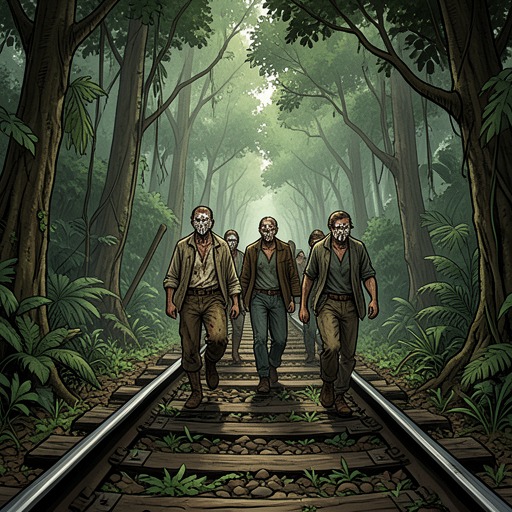
The first locomotive travels the completed [Death Railway](entity:object-recall-object-death-railway-de8c59b02cf8), carrying Japanese and Thai dignitaries past the remains of the laborers who built it. The line has been made without adequate machinery, through forced labor and mass death.
Its completion is celebrated as an engineering achievement, while the identities and numbers of many dead workers remain unrecorded. The railway’s public triumph and its hidden human cost become central to the novel’s question of what history chooses to remember.
1945 and the immediate postwar years
The POW Camp Ends
[Japan](entity:location-recall-location-japan-2b426de89e42)’s defeat strips the railway of its military purpose. The guards and engineers are imprisoned or repatriated, and the remaining forced laborers are released; the line begins to break apart as weather and vegetation reclaim its embankments.
The railway’s disappearance does not undo the suffering or restore the names of the dead. What remains is a landscape in which the forest grows over sleepers, bones, and tools, making the project’s monumental ambition look temporary and futile.
After Japan’s surrender
The Goanna’s Trial
The Goanna, identified at trial as [Choi Sang-min](entity:character-recall-character-choi-sang-min-f21d81419e10), is convicted by an Australian military court for the murder of [Wat Cooney](entity:character-recall-character-wat-cooney-057913c30899) and other abuses, while a charge concerning Frank Gardiner is dismissed. He is sentenced to death, though he believes the proceedings are hypocritical and that higher-ranking Japanese officers have escaped responsibility.
His account of his life shows how Japanese military violence trained him to slap, beat, and dehumanize others, and how the power to hurt prisoners briefly made him feel like someone. The explanation does not erase his crimes, but it reveals the machinery that made him both victim and perpetrator.
After his trial
The Execution at Changi
On the morning of his execution, [Choi Sang-min](entity:character-recall-character-choi-sang-min-f21d81419e10) refuses his last meal, fixates on the fifty yen he believes he is owed, and struggles against the guards. He is hanged after watching another condemned man, Kenji Mogami, led to the gallows.
His final thoughts return to his uncertain identity as Korean, Japanese subject, guard, and man. He dies without finding a personal idea that can make sense of the life he has lived or the authority that has condemned him.
Winter 1946
The Shinjuku Killing
Hiding in the ruins of [Tokyo](entity:location-recall-location-2ef35aba743c), Nakamura reads a newspaper listing him as a suspected war criminal. While sheltering in the [Shinjuku Rashomon](entity:object-recall-object-shinjuku-rashomon-81884a2b192f), he discovers a pan pan girl and a teenage boy beside a wounded American and a few pieces of food.
When the boy attacks, Nakamura kills him with his crowbar, takes the money and food, and arranges the scene to suggest that the dead men killed each other. He threatens the woman into silence, telling her that survival requires forgetting, then leaves under a false identity.
Late 1940s and 1950s
Nakamura’s New Life
Nakamura moves to [Kobe](entity:location-recall-location-36b6d53677ce) and survives through petty black-market work before finding employment in a hospital through [Ikuko Kawabata](entity:character-recall-character-ikuko-kawabata-caa22a8def0a). He marries her and builds a quiet family life, while gradually recasting himself as a gentle, good man.
His friendship with [Kameya Sato](entity:character-recall-character-kameya-sato-e08f0ee13151) ends after Sato reveals that doctors at Kyushu University vivisected captured American airmen and that Japanese biological-warfare programs had also tortured prisoners. Nakamura hears the truth, but his belief that [Japan](entity:location-recall-location-japan-2b426de89e42) and its soldiers were victims helps him keep his former life at a distance.
1959
Kota’s Offer
Nakamura applies for a job at the [Japan Blood Bank](entity:organization-recall-organization-325e81e6b238) and discovers that his interviewer is [Colonel Kota](entity:character-recall-character-colonel-kota-57846620134c), now working in the same institution. Kota recognizes him by the shape of his neck and welcomes him into the organization.
The reunion confirms how easily former agents of imperial violence can find respected positions in postwar [Japan](entity:location-recall-location-japan-2b426de89e42). Nakamura feels overwhelmed by what he calls Kota’s kindness, even though the offer also reconnects him to the world he has tried to forget.
After the war
The Railway Men Come Home
The Australian survivors return to civilian life, but their years as prisoners remain difficult to speak about. Many drink heavily, withdraw from family, or struggle with marriages and work; the authorities advise them not to talk about what happened.
Some men die young or disappear from the lives of their comrades. The veterans’ gatherings preserve jokes, names, and fragments of memory, but the camp’s suffering is already being softened or excluded from public understanding.
Postwar Hobart
The Fish Are Freed
After a reunion at the [Hope and Anchor](entity:location-recall-location-e6560c457050), [Jimmy Bigelow](entity:character-recall-character-jimmy-bigelow-c4fdc6465af6) and his former comrades go to [Nikitaris’s Fish Shop](entity:location-recall-location-d92aa3edab1b). They break the display window, scoop the fish from their tank, and carry them to [Constitution Dock](entity:location-recall-location-9a9362ab006a), where [Sheephead Morton](entity:character-recall-character-sheephead-morton-05f46f79e173) releases them into the water.
The men later return to apologize and offer payment, but [Markos Nikitaris](entity:character-recall-character-markos-nikitaris-7880069e431d) instead feeds them and listens to their story. The fish become an image of captivity and release, while the meal gives the survivors a rare night of warmth, company, and shared life.
1948
Dorrigo Marries Ella
Dorrigo returns to [Sydney](entity:location-recall-location-sydney-5250126580b6) after delaying his homecoming and finds [Ella Lansbury](entity:character-recall-character-ella-lansbury-1e36720ef58b) waiting. He cannot remember her name at first and feels estranged from the life she has kept ready for him, but he lets their families and friends carry the engagement forward.
He marries [Ella](entity:character-recall-character-ella-90e3fa62618f) in a haze, telling himself that marriage is the sensible route back to ordinary life. His decision is also a surrender to expectation, and he continues to feel that the person he truly wanted has vanished.
The late 1940s onward
A Marriage of Distance
Dorrigo and [Ella](entity:character-recall-character-ella-90e3fa62618f) build a family, but Dorrigo remains emotionally absent and begins a series of affairs, including one with Ella’s friend Joan Newstead. His public career grows while his private life becomes a pattern of deception and restless dissatisfaction.
Ella continues to love him and tries to understand his behavior, while Dorrigo interprets duty as a reason to stay and as an escape from intimacy. He is unable to tell whether he loves Ella, but his loyalty to her never becomes the fidelity she needs.
A few months after Dorrigo’s honeymoon
Jack Rainbow’s Widow
Dorrigo travels to [Tasmania](entity:location-recall-location-tasmania-f8a2cedb5051) to deliver [Jack Rainbow](entity:character-recall-character-jack-rainbow-3efc458db4d6)’s medals to his widow after learning that [John Menadue](entity:character-recall-character-john-menadue-b449be6ba9fa) has never managed to visit her. He finds her in a remote farmhouse and learns that she has raised five children, including a son born after Jack left for war.
She asks whether Dorrigo believes in love and describes love as a note that finds a room and makes it hum. Dorrigo recognizes the echo of the life he once shared with [Amy](entity:character-recall-character-amy-b0c9984bdc2f), while the widow’s quiet account of marriage gives him a model of a love he has never known.
1967
The Son Who Died
During a visit to Tom in [Sydney](entity:location-recall-location-sydney-5250126580b6), Dorrigo learns that his brother had a secret child with [Ruth](entity:character-recall-character-ruth-5948dc08d1c1), Jackie Maguire’s wife. The child was placed with the Gardiner family and named Frank; Tom later learned that Frank died as a prisoner of war in one of the camps where Dorrigo had served.
Dorrigo understands that the man whose death he witnessed in the war was his own nephew. The revelation links the family’s hidden past to the deaths Dorrigo has spent decades trying to record and remember.
1967
The Crossing on the Bridge
Walking across [Sydney Harbour Bridge](entity:location-recall-location-sydney-harbour-bridg-35fb0e1f20f3), Dorrigo sees [Amy](entity:character-recall-character-amy-b0c9984bdc2f) approaching with two young girls. He recognizes her after more than twenty-five years and feels the force of his old desire return, but he cannot decide whether to call out or let her pass.
They walk past each other without speaking. Only at the far end of the bridge does Dorrigo turn back, and Amy is gone; he understands that she had lived while he had treated her as dead, and that his failure to stop her has become another irreversible choice.
After the bridge encounter
Amy’s Last Months
[Amy](entity:character-recall-character-amy-b0c9984bdc2f) returns to her sister’s home and wonders why Dorrigo never came back for her after the war. She has learned of his survival only through his growing public fame and has decided not to contact him, partly because his silence feels like rejection.
She is terminally ill and chooses to spend her remaining time with her nieces, friends, and the familiar pleasures of [Sydney](entity:location-recall-location-sydney-5250126580b6). The pearl necklace Dorrigo gave her remains her private proof of the brief life they shared, and she asks to be buried with it.
1967, during the bushfire crisis
The Tasmanian Firestorm
A rapidly advancing fire threatens [Fern Tree](entity:location-recall-location-fern-tree-de9838cad53e) while Dorrigo is in [Hobart](entity:location-recall-location-hobart-746b38f7f014). Unable to reach [Ella Evans](entity:character-recall-character-ella-evans-af17b647e2d0) by telephone, he borrows a car and drives past a police roadblock into the burning forest to find his wife and children.
[Ella](entity:character-recall-character-ella-90e3fa62618f) has led the children away from the house and into a fibro shed as fire surrounds them. Dorrigo finds them and, with the road cut off, drives the family through a burning obstacle, escaping with them to the roadblock despite severe burns to his hands.
Postwar decades
Jimmy’s Outward Fold
[Jimmy Bigelow](entity:character-recall-character-jimmy-bigelow-c4fdc6465af6) makes his children fold their clothes with the creases outward, frightened by the possibility that a small change might precede catastrophe. He cannot explain the rule, only repeat it, and his children feel the fear and love tangled in his insistence.
In old age he forgets the violence and deprivation of the camps, retaining instead an idea of human goodness and the sound of his bugle. He dies after falling while feeding birds, and his daughter later sells the battered instrument without understanding the full weight of what it carried.
1972 and the years after
The Pictures and the Memorial
Dorrigo becomes publicly known through a documentary about his return to the railway, followed by appearances, commemorations, and accounts that elevate him into a national hero. He is uneasy with the fame, believing it obscures both his failures and the many prisoners whose names and faces are forgotten.
He is asked to write a foreword to [Rabbit Hendricks](entity:character-recall-character-rabbit-hendricks-d96fc01caa72)’s camp drawings, but struggles to describe the beating of Darky and the full meaning of the men’s suffering. His memory is increasingly uncertain, and he fears that public remembrance will turn the dead into symbols rather than people.
Mid-1960s
Nakamura’s Illness
Nakamura develops throat cancer and undergoes surgery and radiotherapy. As his strength declines, Ikuko nurses him with patience and tenderness, and he becomes convinced that he has discovered goodness within himself.
A letter from [Aki Tomokawa](entity:character-recall-character-aki-tomokawa-3a56f5c36a5f) tells him that former railway colleagues are restoring the locomotive for display at [Yasukuni Shrine](entity:organization-recall-organization-yasukuni-shrine-3fa52c674686). Nakamura, no longer afraid of his past, travels north to meet his former corporal and sees the visit as an opportunity to share in the pride of their supposed achievement.
1966
The Confession in Sapporo
At the Tomokawas’ home in Sapporo, Nakamura grows weak and confused, seeing the snow-festival monsters as if they have entered the room. [Tomokawa](entity:character-recall-character-tomokawa-65937a927419) speaks warmly of their wartime service and the suffering they inflicted on Chinese people, treating the railway prisoners’ experience as comparatively easy.
Nakamura realizes that the goodness he has built his later life around cannot erase his role in the violence. He dies after the visit, and Ikuko later tells the Tomokawas that he chose a traditional death poem, believing he had led a good and blessed life.
Decades after the war
Kota’s Hidden Death
A nationalist journalist tries to interview [Shiro Kota](entity:character-recall-character-shiro-kota-533efa6dad96), now an exceptionally old former officer, but cannot find him at home. His daughter discourages any discussion of his wartime service, while an investigation into his affairs reveals that money has been withdrawn from his account.
Police enter his apartment and find Kota’s mummified body in a room lined with poetry books. Beside him lies Basho’s travel journal, a final reminder of the poetry through which he and Nakamura once made their violence seem noble and coherent.
Dorrigo’s old age
The Last Car Crash
At seventy-seven, Dorrigo is driving in [Parramatta](entity:location-recall-location-parramatta-a6aac80b9ac5) when a car carrying fleeing teenagers crashes into his Bentley. Two young people die, and Dorrigo is critically injured, leaving him three days to live.
As the nation praises him as a war hero and debates the younger generation, his mind turns not to public honors but to the men he knew on the railway, to [Amy](entity:character-recall-character-amy-b0c9984bdc2f), and to the lives he failed to understand. His dying becomes a final passage through memories that are vivid, partial, and already dissolving.
Dorrigo’s final days
The Unfinished Promise
In the hospital, Dorrigo drifts through remembered faces, scenes, and poems, including the men who died in the jungle and the hundred prisoners who thanked him before their march. He tries to recover the people he loved and the meanings he once attached to their lives, but memory keeps breaking apart.
His final words turn his lifelong impulse to move forward into a confused command to charge the windmill. He dies believing he has lost and misunderstood much of his life, while the love he once shared with [Amy](entity:character-recall-character-amy-b0c9984bdc2f) remains unfinished and enduring in his mind.
The night of Dorrigo’s death
The Crimson Flower
After learning from [Ella](entity:character-recall-character-ella-90e3fa62618f)’s delayed letter that [Amy](entity:character-recall-character-amy-b0c9984bdc2f) died in the [King of Cornwall Hotel](entity:location-recall-location-king-of-cornwall-hot-35967f25b90f) fire, Dorrigo reads the report repeatedly. He had believed she died in the explosion, never knowing that she had survived it or that she later lived within reach of him.
Unable to sleep, he sees a crimson flower growing beside the muddy path and pauses beneath his lantern. The small bloom recalls the red camellia of their first meeting, a fragile remnant against the novel’s persistent certainty that people, memories, and empires pass away.